 Clearwater Siding
 Siding Repair Built for Sunset Point's Coastal Exposure
Sunset Point sits close enough to the water that homes here take a different kind of beating than siding built for an inland climate ever has to withstand. Hurricane-force winds during storm season put direct lateral pressure on wall panels and fastening systems. Between storms, intense year-round Florida UV bakes painted and vinyl surfaces day after day. Add wind-driven rain that gets forced sideways into seams and trim joints, plus a steady dose of salt air working on fasteners and finishes, and you have a combination that ages siding faster here than in most parts of the country. Repairing siding correctly in this neighborhood means understanding all four of those stressors, not just patching whatever is visibly broken.
We work throughout Clearwater and Pinellas County, and Sunset Point is a neighborhood we're in regularly. That matters more than it might sound like — the failure patterns we see on a Sunset Point home tend to repeat from house to house because the properties share the same wind exposure, the same salt-air drift off the water, and often the same era of original construction. A repair crew that already knows those patterns can diagnose a problem faster and fix the actual cause instead of just the symptom.
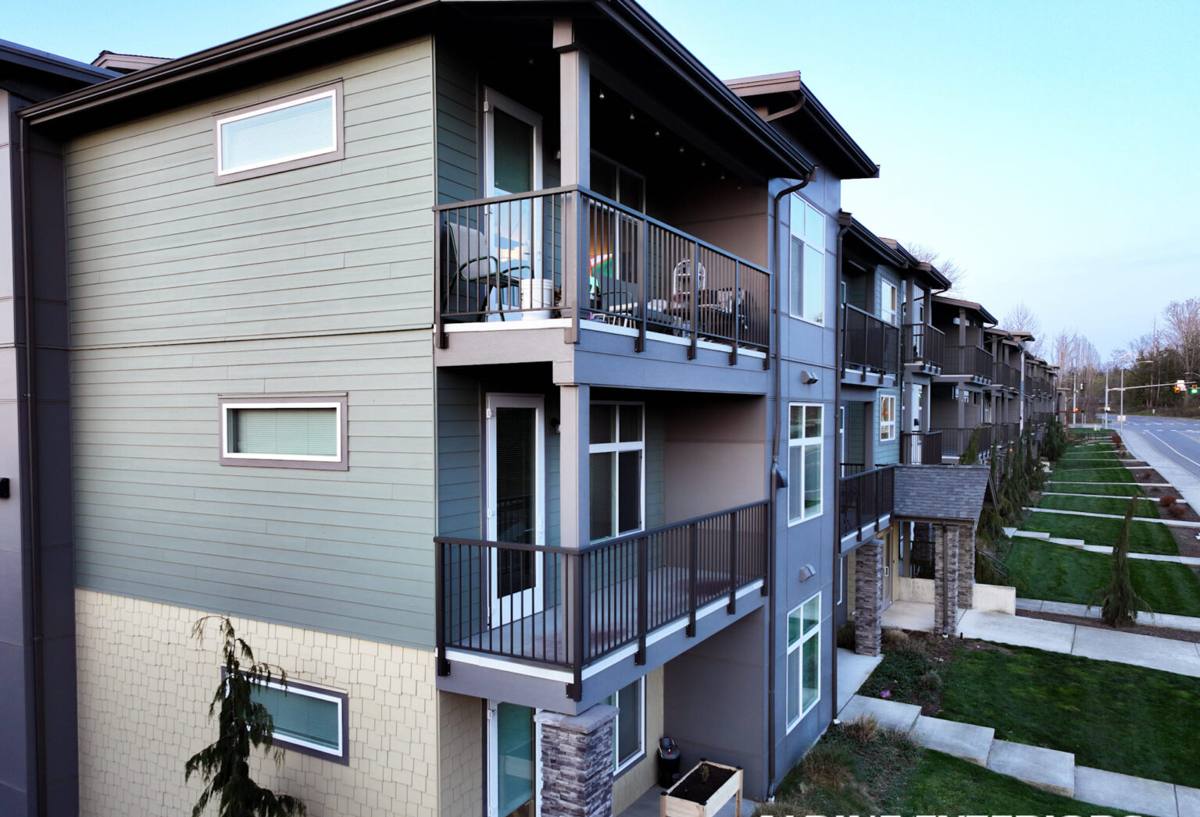
The Damage Patterns We See Most in Sunset Point
Wind and Impact Damage
High wind events don't just rip siding off in dramatic fashion — more often they work panels loose at the fastener points, crack brittle material at the corners, or drive debris into the wall surface hard enough to punch through or split it. Once a panel is cracked or loosened, it's no longer doing its job of shedding water, even if it still looks mostly intact from the street.
Moisture Intrusion at Seams and Trim
Wind-driven rain in this area doesn't fall straight down — it gets pushed sideways and upward under eaves, around window trim, and into panel seams that were never designed to handle water moving in that direction. Once moisture gets behind the siding, it can sit against sheathing and framing for weeks without any visible sign on the surface. By the time staining, soft spots, or a musty smell show up inside, the damage has usually been developing for a while.
UV Fading and Surface Breakdown
Constant sun exposure breaks down paint films and factory finishes over time, leading to chalking, color fade, and in older wood-based products, surface checking that opens the door to moisture. A section that's been fading and drying out for years is also more brittle and more likely to crack the next time it takes a wind hit.
What a Correct Siding Repair Actually Involves
A repair that's done right is not just about swapping out the piece that looks damaged. It requires a few things every time:
- Confirming what's underneath — sheathing, house wrap, and framing all get checked at the repair area before anything new goes back on
- Matching the replacement material's profile, reveal, and thickness so the repair doesn't stand out or create a new water path
- Correcting the water management detail that let the damage happen in the first place, not just patching the hole
- Proper fastening for the wind exposure this area sees, not just whatever the original installer used
- Color and finish matching so the repaired section blends in rather than becoming a visible patch
Skip any one of those steps and the repair looks fine for a season or two, then fails again — often in the same spot.
Why Quick Patch Jobs Don't Hold Up Here
Sunset Point's exposure to wind and moisture means shortcuts show up fast. Here's how a surface-level patch compares to a repair done to address the underlying cause:
| Approach | What Gets Fixed | Typical Result in This Climate |
|---|---|---|
| Caulk-and-paint patch | Visible crack or gap only | Reopens within one to two storm seasons as material moves and UV breaks down the caulk |
| Panel swap without checking sheathing | Damaged panel replaced | Hidden rot or moisture behind the new panel continues untreated |
| Repair without matching fastening | Panel reattached | Same failure point loosens again in the next high-wind event |
| Full diagnostic repair | Damaged material, water path, and fastening all addressed | Section performs like the rest of the wall going forward |
Our Repair Process, Start to Finish
When we come out for a siding repair in Sunset Point, the process is straightforward:
- On-site inspection of the damaged area and a check of adjacent sections for related issues — damage rarely stays isolated to just the spot you noticed
- Probing for moisture or soft sheathing behind the affected panels, since visible damage is often smaller than what's happening underneath
- A clear explanation of what caused the failure and what the repair will involve, before any work starts
- Removal of damaged material and correction of the underlying water management detail
- Installation of matching or replacement material, fastened to hold up under this area's wind exposure
- Finish work so the repair blends with the rest of the wall
We'll always tell you upfront if a "repair" isn't really the right call — sometimes a small section of damage is a sign that a larger portion of the wall is past its useful life, and patching it would just be spending money to delay a bigger job.
Repair or Replace? How We Help You Decide
Not every damaged section needs to become a full re-side. But there are a few factors that tip the decision one way or the other:
| Factor | Favors Repair | Favors Replacement |
|---|---|---|
| Extent of damage | Isolated to one or two sections | Spread across multiple walls or elevations |
| Underlying material condition | Sheathing and framing still sound nearby | Rot or moisture found in several areas during inspection |
| Age of existing siding | Siding is relatively young and otherwise in good shape | Siding is at or past its expected service life |
| Product performance history | Original material has held up well overall | Original material has a pattern of recurring failures in this climate |
Why We Repair and Replace With James Hardie, Not the Original Material
A lot of the repair calls we get in Sunset Point involve vinyl, older wood-based siding, or engineered wood products that simply weren't built for this level of sun, salt, and wind. When a damaged section needs to come out, we don't install more of the same. This company installs James Hardie fiber cement exclusively — we don't put up LP SmartSide, vinyl, Cemplank, Allura, primed spruce, or cedar, even for a partial repair.
That's not a knock on every one of those products across every use case. It's a standard we hold because of what we've seen happen to those materials specifically in coastal Gulf Coast conditions: engineered wood products can be sensitive to sustained moisture exposure at seams and cut edges, vinyl can distort or crack under intense heat and impact, and many of these products rely on field-applied paint finishes that break down faster under constant Florida UV than a factory-cured finish does. James Hardie fiber cement is non-combustible, holds up to wind-driven rain and salt air far better over the long run, and its ColorPlus factory finish is baked on rather than brushed on, so it resists the fading and chalking that drives a lot of the repair calls we get in the first place. It's also backed by a strong transferable warranty when installed to spec — something worth having on a home this exposed to the elements.
When a repair is small and isolated, we'll match Hardie material into the existing wall wherever possible. When the damage points to a bigger, recurring problem with the original siding, we'll tell you honestly that replacement with Hardie is the more durable long-term fix.
Why Local Experience in Sunset Point Matters
Working this neighborhood regularly means we already understand the wind exposure, the salt-air drift, and the construction era common to homes here, which speeds up diagnosis and keeps repairs from turning into guesswork. We're also familiar with Pinellas County permitting and inspection requirements, so repair work that needs a permit doesn't stall out on paperwork. And because we're local, a callback after a storm gets a faster response than waiting on a crew that has to drive in from out of the area.
Signs Your Siding Needs Attention Now
- Visible cracks, splits, or holes in one or more panels
- Panels that feel loose, warped, or pull away slightly from the wall
- Soft or spongy spots when you press on the siding
- Peeling paint, persistent staining, or a musty smell near an exterior wall
- Gaps opening up at trim boards, corners, or panel seams
- Noticeable fading or chalking compared to less sun-exposed sides of the house
If any of these sound familiar, it's worth having it looked at before the next storm season rather than after.
If you're noticing damage on a Sunset Point home, we're happy to come take a look. The estimate is free, there's no pressure, and you'll get a straight answer about whether you're looking at a simple repair or something bigger — just fill out the form below to get started.